

 English
The Mushroom Marketing Mirage
As a Director of Quality Assurance and Quality Control, my days are spent analyzing data, scrutinizing laboratory results, and ensuring the absolute purity of natural health products. Recently, it has been incredibly exciting to witness the rising consumer demand for medicinal mushrooms. People around the world are realizing the true therapeutic benefits these incredible fungi offer, seeking out natural ways to support their immune systems, enhance their energy, and improve their overall wellbeing.
This modern surge in popularity is firmly backed by decades of rigorous scientific research. We now have a deeper understanding of exactly how these fungi interact with the human body. For instance, a comprehensive review published in Nutrients clearly documented how mushroom-derived beta-glucans exert powerful immunomodulatory and anti-inflammatory effects, while also showing immense potential for protecting cardiometabolic health.[i] We are even seeing their life-changing applications in oncology; a recent landmark review highlighted how specific fungal beta-glucans can engage directly with our immune receptors to actively enhance antitumour immunity.[ii] These foundational health benefits extend across all ages as we saw in the data from a review paper which confirmed their safety and efficacy in stimulating robust immune responses, even in children.[iii]
However, this excitement is heavily shadowed by a rapidly growing problem in the supplement industry. Every single day, I see marketing materials and claims from various brands that leave me perplexed. As a scientist, it saddens me to see well-intentioned consumers falling for misleading marketing. People are spending their hard-earned money on products that simply cannot deliver what they promise. The purpose of this article is to contribute to the education of retailers and consumers alike so they can recognize genuine quality, bypass the deceptive marketing, and identify the true active compounds that actually heal.
The Polysaccharide Loophole
To understand how consumers are being tricked, we have to look at the chemistry of medicinal mushrooms. These fungi owe their powerful therapeutic properties to specific active compounds known as beta-glucans. These complex molecules interact directly with our immune receptors to trigger a cascade of health benefits. They are vastly different from alpha-glucans (mostly inactive), which are essentially the simple starches found in everyday dietary foods like potatoes, rice, or other cereals.
The current problem arises from a deceptive loophole in industry testing standards. Some brands intentionally and artificially inflate their product numbers by testing for “total polysaccharides” rather than isolating the specific medicinal beta-glucans. To be clear, the term polysaccharide is just an umbrella category. It includes both the highly beneficial therapeutic beta-glucans, the nontherapeutic alpha-glucans, and other types of sugars.
This questionable practice and the critical need for accurate testing was thoroughly exposed in a study published in the Journal of AOAC International.[iv] This pivotal research demonstrated that many commercial products boasting high polysaccharide numbers are actually composed primarily of alpha-glucans from starch, entirely devoid of the medicinal beta-glucans consumers are supposed to be paying for.
To make matters worse, many manufacturers cut corners by growing their mushroom mycelium on grain substrates. Instead of allowing the mushroom to fully develop into a fruiting body (the part of the mushroom used traditionally for thousands of years), they harvest the vegetative mycelium along with the grain it grows on.
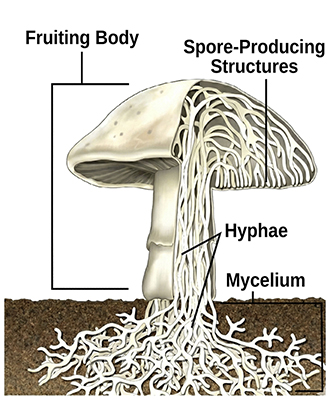
When this grain-heavy material is processed, the final extract contains a substantial amount of residual starch. As the AOAC study confirmed, by testing for total polysaccharides, these companies count that nonbeneficial rice starch toward their final active compound numbers. When a brand boasts a significant polysaccharide count, they are very often just selling you expensive grain powder. It is a deliberate distortion of the numbers that completely disregards the science of natural medicine.
What Nature Provides
As a scientist, I look to nature for the truth. Genuine mushroom fruiting bodies have strict, natural biological limits regarding their beta-glucan content. Nature simply does not produce the high percentages you often see on certain brands’ labels, websites, and promotional materials.
These inflated figures do not exist in nature without unnatural chemical manipulation or, much more commonly, measuring the wrong compounds entirely. It’s designed exclusively to boost sales and gain a competitive edge, at the expense of the consumer’s health—and wallet.
In concert with the laboratory we utilize, we flatly refuse to play this game. We rely on extremely rigorous quality assurance and quality-control testing protocols. We utilize advanced, highly specific analytical assays designed to isolate and measure only the true active beta-glucan compounds, explicitly excluding any background starches.[v] By holding ourselves to this strict scientific standard, we ensure that the numbers we report are a reflection of what is actually in the products we offer.
Demanding True Transparency
Consumers and retailers deserve the unvarnished truth. You have the power to change this industry by demanding transparency from the manufacturers you choose to trust. Ask the hard questions and carefully review what you are purchasing.

Reading Supplement Labels
- The label should clearly state the exact percentage of beta-glucans. If it doesn’t, or they only state the total polysaccharides, be weary of what’s in the bottle.
- The ingredients list should specify 100% fruiting body instead of mycelium or grain spawn. If nothing is mentioned, be weary of what’s in the bottle.
- The product should not boast an unusually high and biologically impossible active compound number. If it does, be weary of what’s in the bottle.
- The packaging should include a reference to independent third-party laboratory testing. Extra points if it’s an ISO 17025–accredited one.
My team’s commitment to rigorous quality control and honest labeling is unwavering. We will never artificially inflate our numbers or manipulate testing methods just to compete with a marketing diversion. We believe in the power of nature and the necessity of scientific accuracy.
Preserving the therapeutic integrity of natural medicine is not just my daily responsibility as a Quality Control Director; it is a shared global responsibility. Together, through education and demanding better standards, we can dispel this mushroom marketing mirage. We can ensure that when someone reaches for a medicinal mushroom supplement to improve their health, they receive the genuine, uncompromised healing benefits they truly deserve.

Serge Philibert Kuate, PhD
Serge directs the Quality Assurance and Quality Control department at New Roots Herbal. A native of Cameroon, his body of work at international research institutions includes pharmaceutical biology, insect ecology, microbiology, mycology, chemistry, and enzymology.
References
[i] C. Cerletti, S. Esposito, and L. Iacoviello. “Edible mushrooms and beta-glucans: Impact on human health.” Nutrients 13, no. 7 (2021): 2195.
[ii] M.A.S. Reza, S. Najafi, M. Kahfi, M. Safari, and M. Mahjoor. “beta-Glucans in oncology: Revolutionizing treatment with immune power & tumor targeting.” Naunyn-Schmiedeberg’s Archives of Pharmacology 399 (2026): 1711–1720.
[iii] R. Bhoite, V. Satyavrat, and M.P. Sadananda. “Clinical benefits of β‑glucan supplementation in children: A review.” Discover Food 2, no. 1 (2022): 37.
[iv] B.V. McCleary and A. Draga. “Measurement of β‑glucan in mushrooms and mycelial products.” Journal of AOAC International 99, no. 2 (2016): 364–373.
[v] Ibid.
